Best Beaujolais Nouveau 2026 to Buy Online: Match the Bottle to Your Wine Style
A Sneak Peek into French Gourmet Expertise — Made Approachable
ToggleWhen the third Thursday of November rolls around, walking into a wine shop, or scrolling through your favorite online wine retailer, can feel like staring at a wall of colorful, identical labels. Though your best Beaujolais Nouveau 2026 bottle is hiding in these arrays. Which bottle actually tastes good, and which one fits the kind of wine you love to drink?
How to Pick Your Best Beaujolais Nouveau 2026 Bottle: Real Wine Love, Zero Snobbery
If I had it my way, I would spend this entire guide talking strictly about small, family-run grower estates whose primeur wines have captured my heart and my thirst for authenticity. However, those small-batch gems aren’t always the easiest bottles to track down across the US. To strike the right balance, I’m going to share the exact style signatures of the major historic wine houses you can easily find online and nationwide, followed by my personal 5 favorite artisanal domains worth hunting down if you have a great independent wine shop nearby.
The Big Four: Which Iconic Bottle Fits Your Palate?
These four historic ambassadors are the most visible names on the market every November. While they all work with the same Gamay grape and the same 2026 solar harvest, each house brings its own unmistakable signature to the bottle.
For Lovers of Plush, Fruit-Forward Reds: The Best Beaujolais 2026 Bottle is from Georges Duboeuf
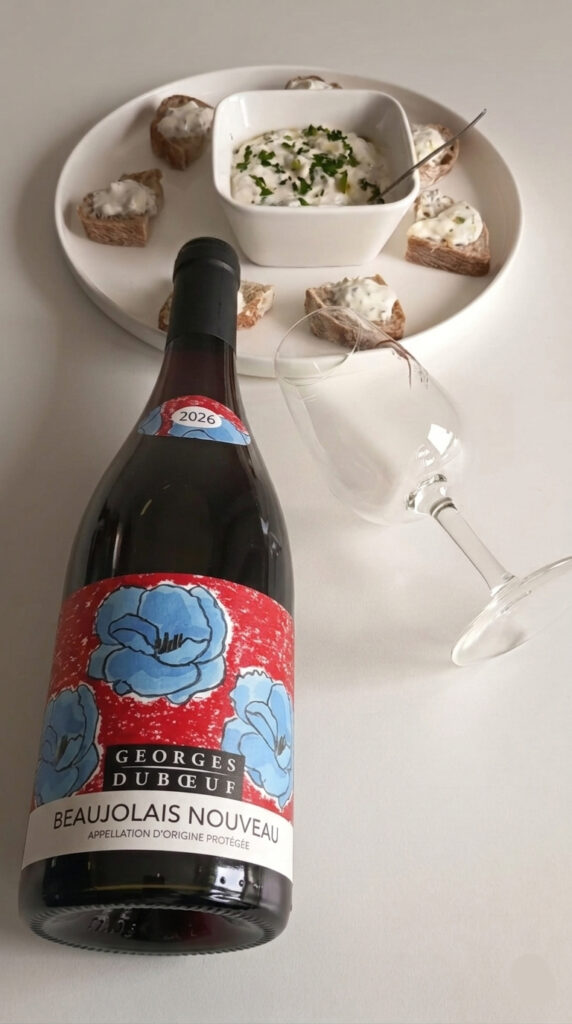
You can’t talk about Beaujolais Nouveau without mentioning Georges Duboeuf. Alongside legendary chef Paul Bocuse, he single-handedly turned this local harvest celebration into a global phenomenon.
The Style & Insider Tips:
In almost every vintage, the Duboeuf signature is fruity, round, and generous. Expect a silky texture on the palate and indulgent, candied berry aromas.
If you spot their Beaujolais-Villages Nouveau bottling right next to the classic label, grab it. As it offers a noticeable step up in depth and is well worth tasting.
For Fans of Crisp, Structured Wines: The Best Beaujolais 2026 Bottle is from Louis Jadot
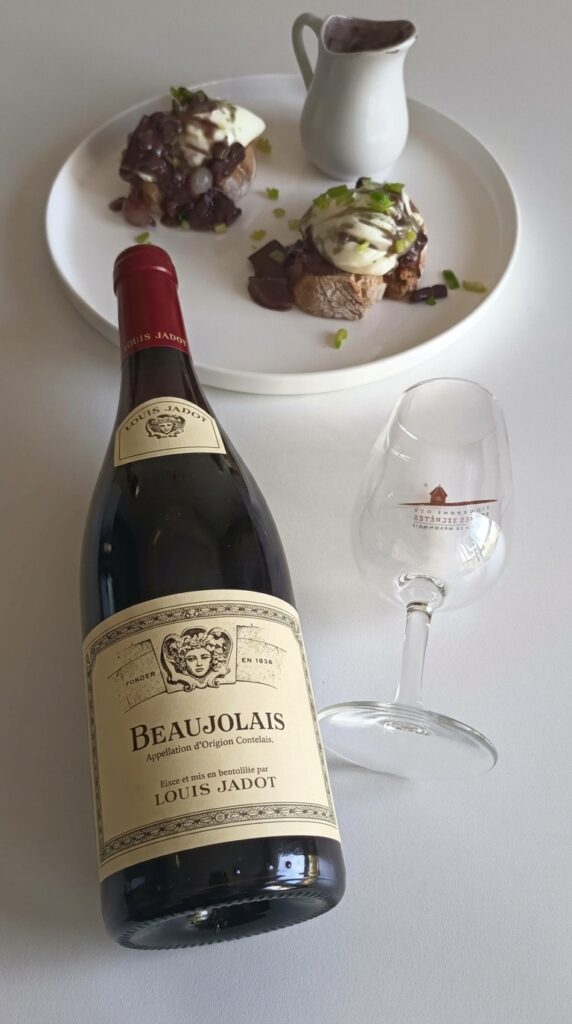
This powerhouse Burgundy house has built a rock-solid reputation across English-speaking markets, delivering reliable quality across every single Beaujolais appellation.
The Style & Insider Tips:
Louis Jadot’s Beaujolais Nouveau consistently leans toward freshness and bright fruit with a lovely, velvety mouthfeel. Crucially, it is much less dominated by that sweet « boiled candy » aroma, following the lines of a drier, more structured red wine.
Their AOC Beaujolais-Villages Primeur delivers remarkable value for money if you prefer a slightly more serious, and still food-driven red.
For Pinot Noir Drinkers Seeking Elegance: The Best Beaujolais 2026 Bottle is from Joseph Drouhin
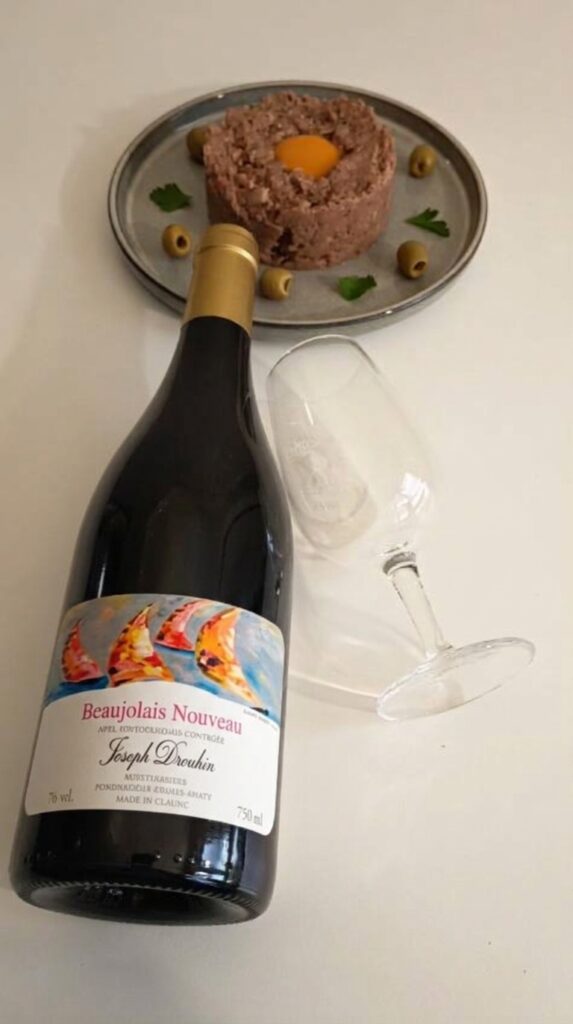
Born and bred in Burgundy, Joseph Drouhin knows how to apply classic Burgundian finesse and restraint to the wines of Beaujolais. It is a safe, no-fail choice that wins over more discerning wine lovers every year.
The Style & Insider Tips:
Drouhin’s Beaujolais Nouveau is round, balanced, and supple. It embodies pure, immediate pleasure: fruity, charming, and effortlessly drinkable without ever feeling heavy.
Winemaker Véronique Drouhin crafts their Fleurie and Moulin-à-Vent Crus using her signature Burgundy playbook, making them the ultimate insider’s Pinot Noir alternative.
For Adventurous Palates Craving Spice & Crunch: The Best Beaujolais 2026 Bottle is from Jean Loron
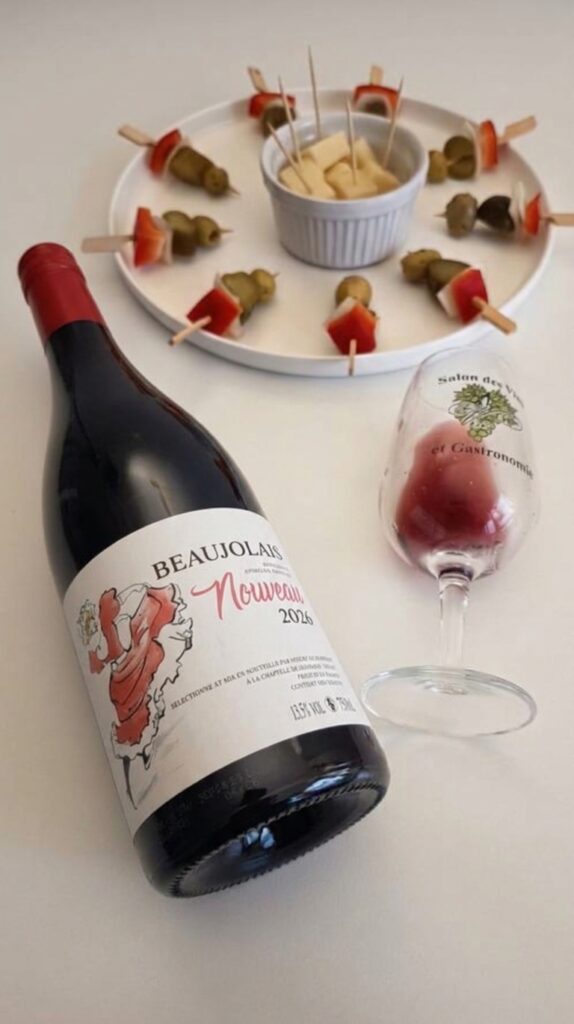
An integral part of the Beaujolais landscape since 1711, Jean Loron crafts wines for insiders and curious drinkers looking for deep historical roots and some of the best price-to-quality ratios in the region.
The Style & Insider Tips:
More than most of its peers, Jean Loron leans into traditional whole-cluster vinification. The wine displays classic, subtle herbal and stems-driven notes that are part of Beaujolais’s traditional DNA. The palate is light, supple, and crunchy, lifted by a pinch of spice and ultra-fine tannins
Look out for Loron’s Vieilles Vignes or Unfiltered (Non-Filtré) Nouveau bottlings: they taste just like sampling fresh wine straight from the winemaker’s barrel.
Foodie Tasting Newsletter
French Wine Tasting & Pairing Tips Twice-Monthly
Thank you!
You have successfully joined our subscriber list.
Insider Picks: 5 Artisanal Domains Worth Hunting Down
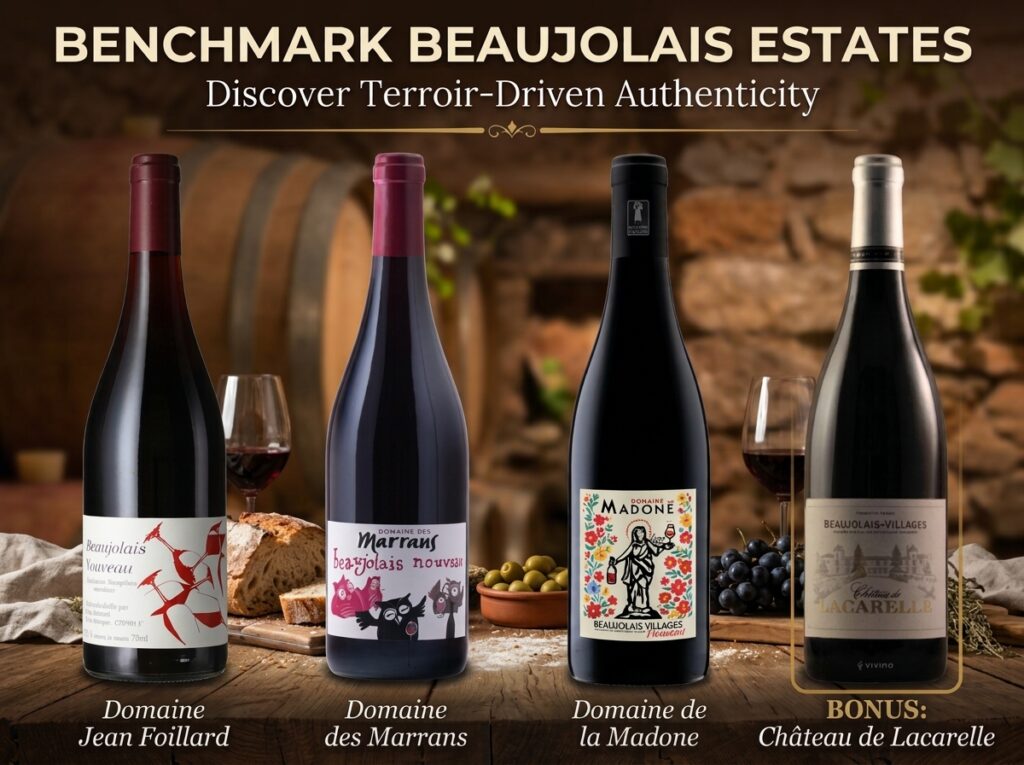
If you enjoy exploring independent wine shops or boutique online importers, keep your eyes peeled for these five benchmark estates. Year after year, they represent the pinnacle of authentic, terroir-driven Beaujolais:
- Domaine Jean Foillard
- Domaine Marcel Lapierre
- Domaine des Marrans
- Domaine des Combiers
- Domaine de la Madone
(Bonus Insider Note: Château de Lacarelle produces a Beaujolais-Villages Primeur that rivals some of the region’s top Crus. If you ever stumble across a bottle, buy it and drink it with your eyes closed.)
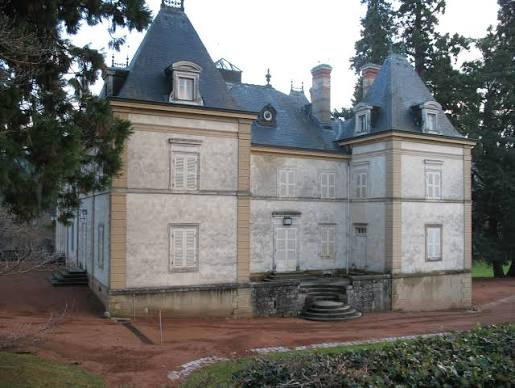
From Chiroubles to Your Table: The Future of Beaujolais is Human
Let’s be honest: Beaujolais Nouveau’s public image isn’t what it used to be. Because of that, both winemakers and the regional wine board realized it was far smarter to aim for high quality rather than flooding the market with entry-level plonk.
Less Volume, More Soul amidst Best Beaujolais Nouveau 2026: The Rise of Single-Estate Primeurs
Today, even the major wine houses are increasingly bottling single-estate primeurs. We are witnessing a simultaneous drop in production volumes and a genuine rise in quality: shifting away from the idea of a single, generic « Beaujolais Nouveau » toward a mosaic of individual Beaujolais Nouveaux, each carrying the true signature of a specific vigneron and estate.
It’s a healthy evolution that keeps the festive spirit of the new harvest alive.
From Chiroubles Festivals to Intimate Open Cellars: A Quest for Best Beaujolais Nouveau 2026 Cuvées
Some of my fondest memories around Beaujolais Nouveau took place on the Terrasses de Chiroubles, one of the 10 Beaujolais Crus, surrounded by an authentic winemaker atmosphere. Back then, the wine wasn’t just poured; it was celebrated with live music in a warm, friendly spirit driven by the local Chiroubles growers’ syndicate. Those village celebrations existed all across the region.
And I truly believe that is where the salvation of Beaujolais Nouveau lies: bringing these wines closer to the winemakers themselves, and stepping back from big institutional marketing.
Looking at the calendar in 2026, the Terrasses de Chiroubles feels less central than it once was, with nothing major on the official bill. Instead, you see independent winemakers like Domaine Steeve Charvet hosting their own intimate « Beaujolais Nouveau & Old Vintages » open-cellar tastings from Thursday, November 19 through Saturday, November 21.
How Historic Houses and Artisans Bring This Revival to You
That is a wonderful sign. It puts a human face back on Beaujolais Nouveau. And in this human revival, the big wine houses still have a vital role to play. They built the global distribution highways that can now partner with independent growers so the entire region thrives. Trust me, this movement is already underway, and it won’t stop surprising you with its generosity, lightness, and pure conviviality.
6 Common Mistakes to Avoid When Buying Your Best Beaujolais Nouveau 2026
Standing in front of a retail display or filling your online cart in November can be tricky. Avoid these six classic buying traps to make sure you bring home the right bottles:
1. Picking a Bottle Based Strictly on the Flashiest Label
Beaujolais Nouveau is famous for its bright, artistic labels, and it is easy to assume the wine inside every bottle tastes identical. The fix: Match the producer to your personal palate. If you love plush, fruit-forward reds, reach for Georges Duboeuf; if you prefer crisp structure, go for Louis Jadot; for Pinot Noir-like elegance, pick Joseph Drouhin; and for spicy, traditional crunch, grab Jean Loron.
2. Accidentally Buying a Leftover 2025 Bottle on the Shelf
Here is a little-known secret of the US retail market: some liquor stores leave unsold bottles from the previous year sitting on the rack. A year-old Nouveau will have lost all the vibrant fruit that makes it magical. The fix: Always double-check the vintage year printed prominently on the front label or neck collar. Make sure it clearly says 2026 before buying.
3. Overlooking "Beaujolais-Villages" for Just $2 to $3 More
Shoppers often grab the entry-level regional bottle without noticing its upgraded sibling sitting right next to it. The fix: Whenever you spot Beaujolais-Villages Nouveau (from houses like Duboeuf, Jadot, or Château de Lacarelle), spend those extra couple of dollars. The grapes come from steeper granite hillsides in the northern part of the region, giving you noticeably more depth and silkiness.
4. Hesitating Between "Nouveau" and "Primeur" at Checkout
When browsing online, you might see Louis Jadot or artisanal estates labeled as Beaujolais Primeur rather than Beaujolais Nouveau, making you wonder if it is the same wine. The fix: Buy with total confidence! Legally and traditionally in France, Nouveau and Primeur mean the exact same thing: an early-release wine from the 2026 harvest meant to be enjoyed young.
5. Waiting Until Thanksgiving Eve to Order Online
Because producers now adhere to the « make less, make it better » philosophy, US allocations of the best cuvées, especially single-estate bottlings and my Top 5 artisanal domains, sell out quickly. The fix: If you are ordering online for Thanksgiving delivery, lock in your pre-order in early-to-mid November so your bottles arrive safely and have time to rest before the holiday.
6. Buying Only One Style When Hosting a Group
Trying to find a single red wine that pleases both your aunt who loves soft, fruity merlots and your cousin who only drinks dry, structured reds is a holiday headache. The fix: Because Beaujolais Nouveau is so affordable, buy a two-style duo—for example, one bottle of Duboeuf (lush and fruity) alongside one bottle of Jadot or Loron (crisp and structured). Doing a side-by-side tasting is an instant party hit!
Your French Wine Concierge in Your Inbox
Take your table to the next level. No jargon, no snobbery : just flavor and confidence.
- Hand-picked French bottles available in the U.S
- Effortless restaurant-level recipes and pairings
- Simple ideas for memorable emotions
Welcome In this French Wine & Food Notes Mailing
Thanks for joining the Foodie Tasting Community
I’d like to receive newsletters & inspiration
No Spam. You can unsubscribe anytime.
Frequently Asked Questions (FAQ): Buying & Ordering Best Beaujolais Nouveau 2026
1. How much should I expect to pay for a great bottle of Beaujolais Nouveau in 2026?
Beaujolais Nouveau remains one of the best values in the French wine world. In the US, expect to pay between $14 and $19 for the major historic wine houses (Duboeuf, Jadot, Drouhin, Loron), and around $17 to $22 for their upgraded Beaujolais-Villages bottlings. If you hunt down one of the 5 artisanal grower estates (like Foillard or Lapierre), expect to pay between $25 and $32: still a bargain for world-class, handmade terroir wine.
2. Can I buy Beaujolais Nouveau 2026 online before release day?
Yes, and pre-ordering is actually the smartest way to shop! Reputable online wine retailers open pre-orders in late October and early November. By French law, retailers cannot ship or release the wine to you before Thursday, November 19, 2026, at 12:01 AM, but pre-ordering guarantees your allocation is packed and dispatched the moment the embargo lifts, arriving right in time for Thanksgiving week.
3. What is the difference between a standard bottling and an "Unfiltered" (Non-Filtré) cuvée like Jean Loron’s?
Most wines are filtered before bottling to make them crystal-clear. An Unfiltered (Non-Filtré) Beaujolais Nouveau skips that step to preserve every last drop of texture and fresh-from-the-vat aroma. If your glass looks slightly hazy or has a tiny bit of natural sediment at the bottom, don’t worry. That is the hallmark of traditional, minimal-intervention winemaking and delivers an incredible burst of flavor.
4. How can I track down rare artisanal bottles like Jean Foillard or Marcel Lapierre in the US?
Because these cult family estates produce tiny quantities, you won’t find them in supermarkets. To find them online, search specialty wine retailers that focus on natural and grower-driven French wines. In a local independent wine shop, here is an insider trick: turn the bottle around and look at the importer stamp. Keep an eye out for benchmark US importers like Kermit Lynch Wine Merchant (who imports Lapierre and Foillard). That stamp on the back label is an instant guarantee of authenticity.
5. Why are major houses starting to put "Single-Estate" (Domaine or Château) names on their Nouveau labels?
As Beaujolais shifts away from mass volume toward higher quality, historic houses are highlighting specific vineyards and family estates they partner with or own (such as Château de Lacarelle or single-vineyard cuvées). If you see a specific Domaine or Château named on a bottle from a major producer, grab it. It offers far more personality and terroir character than a generic regional blend.
6. If I can only buy two bottles for Thanksgiving 2026, what is your ultimate winning combo?
For a foolproof two-bottle lineup that covers every palate at your table, pick up one bottle of Joseph Drouhin Beaujolais Nouveau (for pure Burgundian silkiness that everyone will love during appetizers) and one bottle of Louis Jadot or Georges Duboeuf Beaujolais-Villages Nouveau (for the extra depth needed to stand up to your roasted turkey and rich pan gravy).