Beaujolais Wine Guide: What It Is, How It Tastes, and How to Choose the Right Bottle
A Sneak Peek into French Gourmet Expertise — Made Approachable
ToggleSummary Of the Beaujolais journey and discovery you will have in this guide :
- Discover the history and unique taste of Beaujolais wine, a vibrant, fruit-forward red made from the Gamay grape that offers the perfect balance of freshness and drinkability.
- Explore the diversity of the region’s 10 Crus and styles, ranging from light, spontaneous bottles for casual gatherings to structured, age-worthy wines that rival fine Burgundy.
- Learn how to confidently buy the best Beaujolais online for your personal taste, holiday meals, or food pairings, while avoiding the most common beginner buying mistakes.
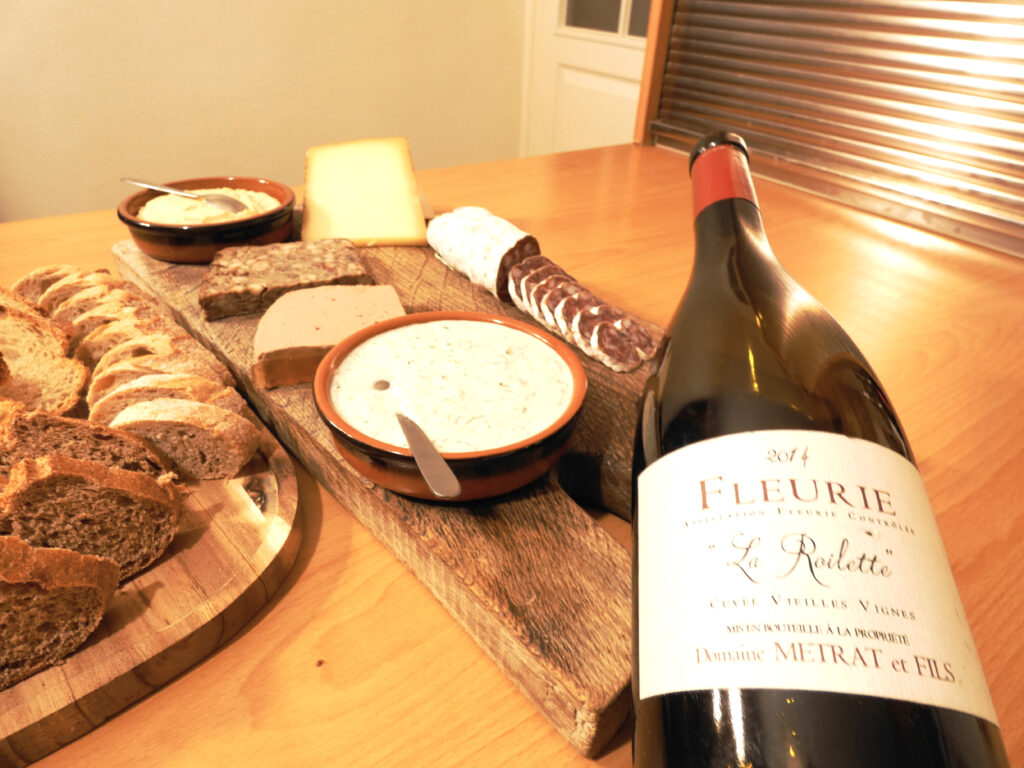
If you’ve ever felt overwhelmed browsing the French wine aisle, you are not alone. Between complex classification systems and hard-to-pronounce labels, finding a wine that is both high-quality and easy to enjoy can feel like a chore.
Enter Beaujolais.
This vibrant region offers some of the most versatile, delicious, and food-friendly red wines in the world. Whether you are hosting an impromptu happy hour, planning a formal holiday dinner, or looking for the perfect gift, this ultimate Beaujolais wine guide will show you exactly what is Beaujolais, how it tastes, and how to pick the perfect bottle online tonight.
What Is Beaujolais ?
To understand Beaujolais, you have to look at its deep history, unique terroir, and its absolute superstar grape variety: Gamay wine.
The story of Beaujolais dates all the way back to 1395. At the time, Duke Philippe le Hardi (Philip the Bold) feared that the incredibly productive Gamay grape would compete with the Pinot Noir of the main Duchy of Burgundy. To protect Pinot Noir, he ordered all Gamay vines to be ripped out of Burgundy’s northern heartlands and replanted further south, taking root beautifully in the sun-drenched hills of Southern Burgundy and the Beaujolais region.
Today, Beaujolais winemaking is a proud blend of tradition and unique technique. The grapes are exclusively hand-harvested and are frequently vinified using whole clusters. This whole-cluster approach infuses the wine with a subtle, refreshing green and vegetal touch.
More importantly, the region is famous for a process called semi-carbonic maceration. This typical local technique coaxes out a highly distinct, aromatic profile often referred to as « amylique » flavors. When you take a sip, it rewards you with vibrant notes reminiscent of Harlequin candy, rich fruit syrup, and sweet confectionery.
What Does Beaujolais Taste Like ?
At its core, a classic Beaujolais is light, fluid, and incredibly thirst-quenching. What French wine lovers fondly call a « vin juteux » (a juicy wine). Taking a sip gives you the exact sensation of biting into fresh, crisp, sun-ripened fruit.
When exploring the Beaujolais taste, your palate will run into a gorgeous basket of red and black fruits, including :
raspberry
wild strawberry
blackcurrant
blackberry
In high-quality bottles, you will even find morello cherry (cerise griotte) and white pepper, which are the typical signature aromas of the world’s finest Burgundy wines.
But it isn’t just about fruit. A great Beaujolais takes you on a spring walk, showing off delicate floral aromas of :
violet
peony
iris
In the most noble expressions, such as a well-crafted Moulin-à-Vent, you will discover notes of dried roses : a sophisticated trait shared with legendary Bordeaux collectibles.
To round out this natural tenderness, the wines feature subtle, complex background spices like :
white pepper
cinnamon
clove
This adds character and a touch of sophistication. It is a style that is simple, direct, and accessible, yet it masterfully borrows the noble codes of the world’s greatest luxury wines.
Foodie Tasting Newsletter
French Wine Tasting & Pairing Tips Twice-Monthly
Thank you!
You have successfully joined our subscriber list.
The Main Beaujolais Styles
The region’s offerings can be broken down into three distinct Beaujolais wine styles, ranging from ultra-spontaneous to highly collectible.
Beaujolais Nouveau
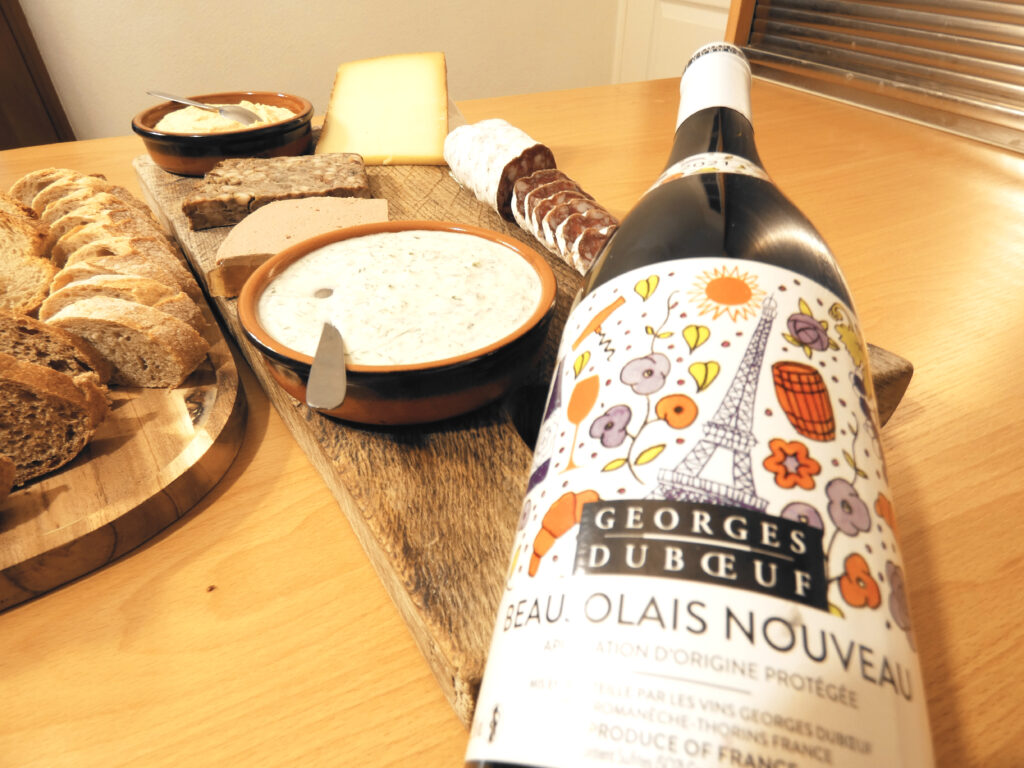
Celebrated globally every third Thursday of November, Beaujolais Nouveau Day is a worldwide wine phenomenon. This wine is incredibly light, fruity, and versatile. In fact, it is so adaptable that it is famously paired with delicate fish dishes, a massive trend in markets like Japan.
Beaujolais and Beaujolais-Villages
AOP Beaujolais: This regional appellation offers ultra-supple, thirst-quenching wines defined by pure freshness and crunchy red fruit aromas.
AOP Beaujolais-Villages: Sourced from 38 specific villages in the northern part of the region, these wines grow on premium granitic soils. The granite gives the wine deeper structure, excellent concentration, subtle notes of dark fruits, sweet spices, undergrowth (sous-bois), and fantastic aging potential. It is often perceived as less acidic than casual wines of this region.
Cru Beaujolais
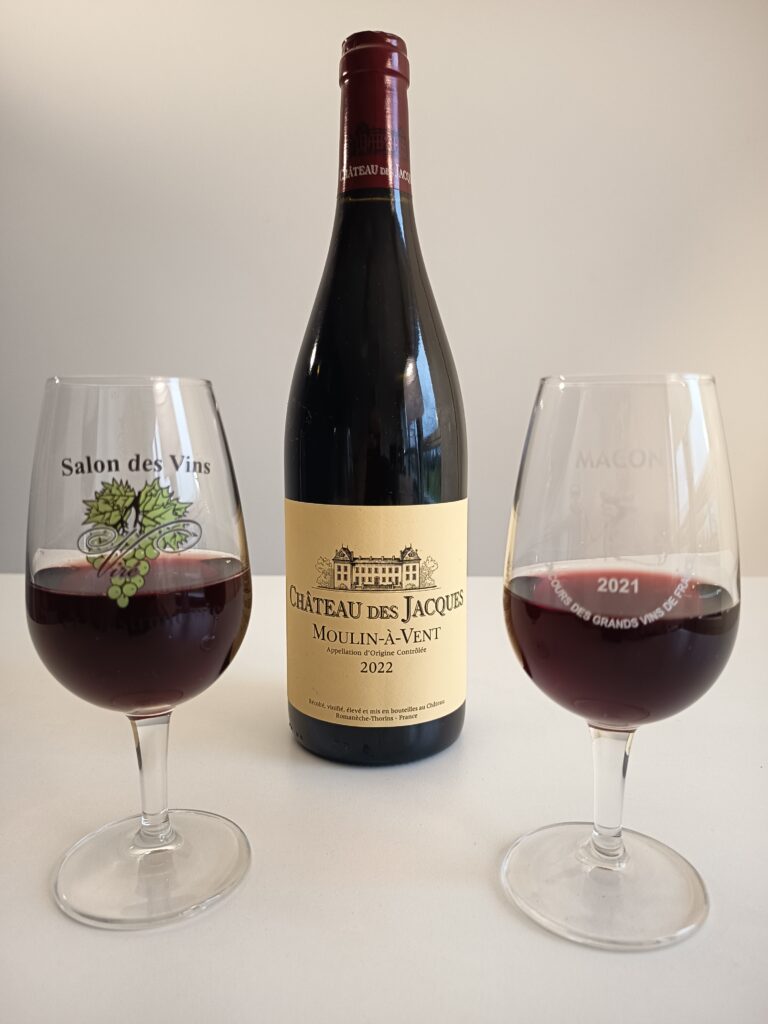
The absolute pinnacle of the region consists of 10 specific « Crus, » which can be divided into three easy-to-understand flavor profiles:
Not Sure which Beaujolais style fits your personal taste or occasion best ?
Download the free Beaujolais Moment Guide using the button just below this section. It breaks down exactly which Beaujolais bottles work best for casual brunches, romantic dinners, holiday meals, cozy nights in, last-minute apéritifs, and more — so you can confidently choose the right wine every time.
How to Choose the Right Bottle ?
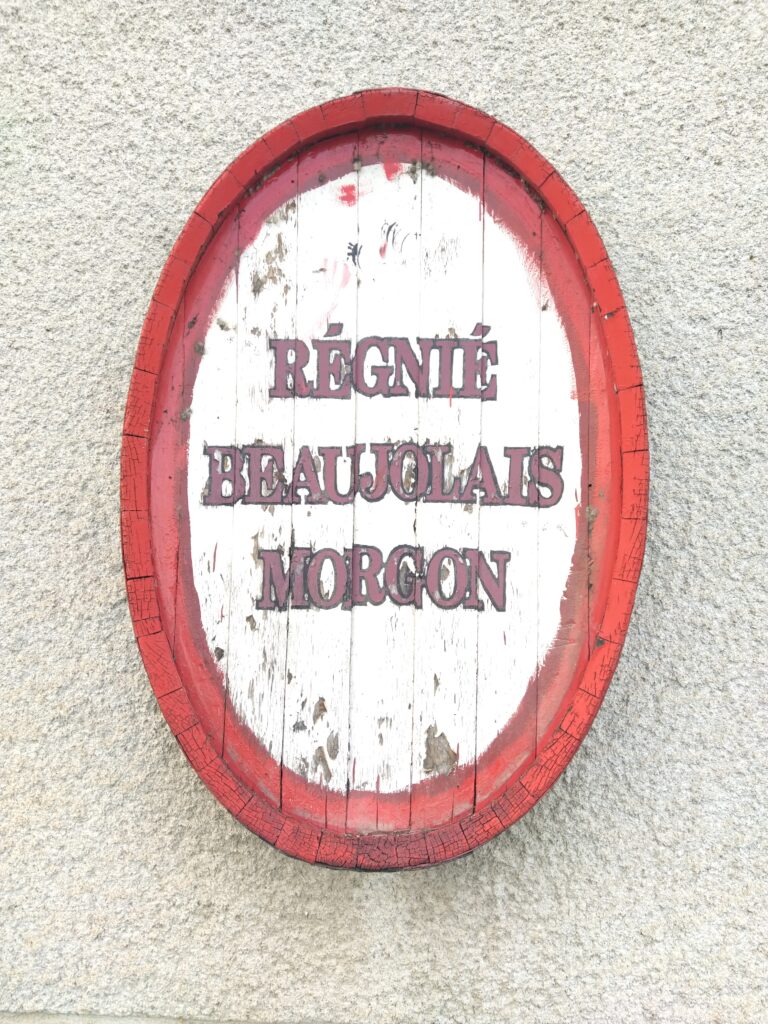
Ready to buy? Here is how to choose Beaujolais depending on who is drinking and what you are serving.
Best Beaujolais for Beginners
If you are new to the region, you want a charming, instantly pleasing wine with universal appeal. Look for a Fleurie or a solid Beaujolais-Villages. These bottles are easy to find and completely lack harsh bitterness or heavy salinity. Instead, they lean into a crowd-pleasing balance of soft fruit and freshness, delivering delicious hints of English candy and fruit syrup in a fluid, easy-drinking frame.
If you are just getting started with Beaujolais, choosing the right bottle can still feel confusing.
Grab the free Beaujolais Moment Guide by clicking the button below. Inside, you’ll discover the best Beaujolais wines for beginner-friendly situations like relaxed dinners, easy entertaining, date nights, Thanksgiving, outdoor lunches, and everyday drinking moments.
Best Beaujolais for Food Pairing
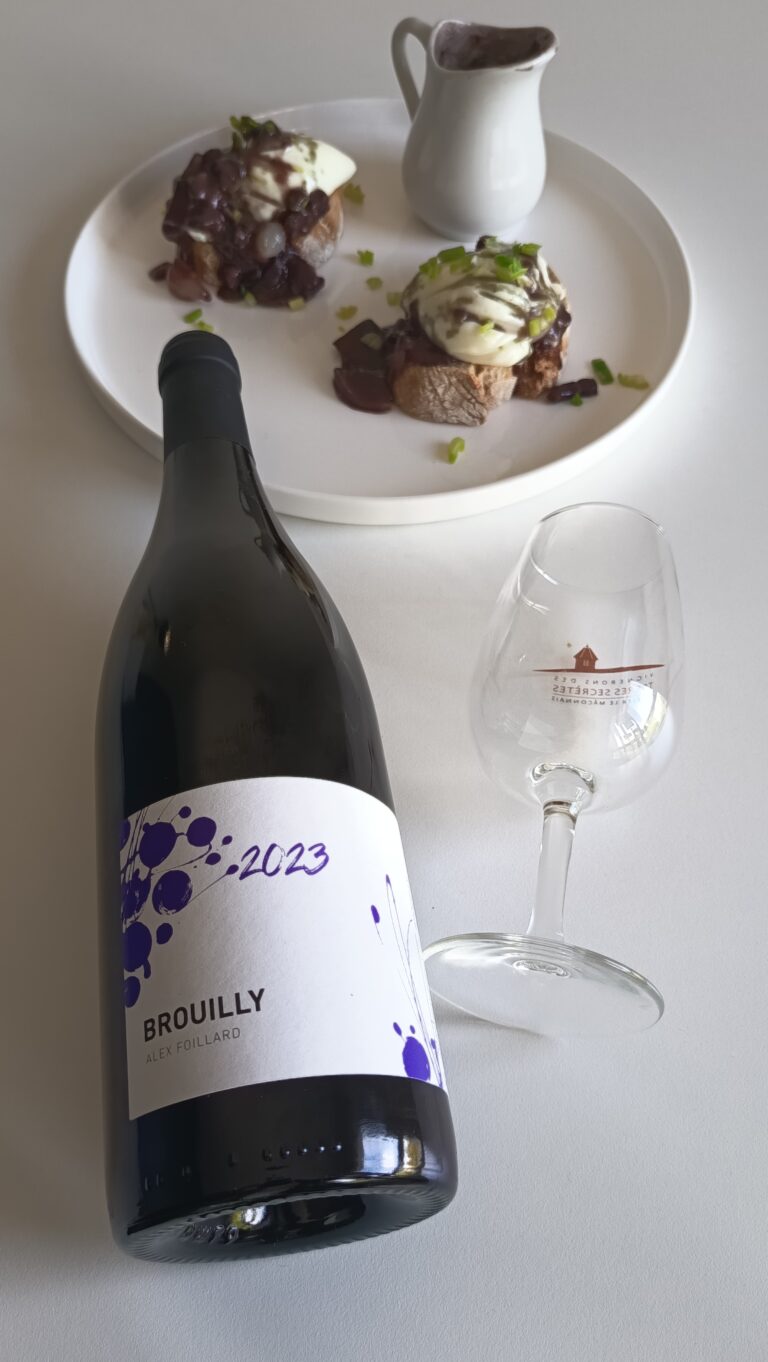
Because of its low tannins and bright fruit, top sommeliers frequently call Beaujolais the only red wine category that can effortlessly pair with fish. For the ultimate all-rounder food wine, choose a Brouilly or a Morgon. They masterfully bridge the gap between fresh fruit and elegant structure, allowing them to complement an incredibly wide array of international culinary styles, cuisines, and dishes.
Want to know exactly which Beaujolais works best with different meals and social occasions?
Use the button below to download the free Beaujolais Moment Guide. It gives you practical, real-life recommendations for pairing specific Beaujolais styles with everything from seafood dinners and barbecue nights to holiday gatherings and spontaneous wine-and-cheese aperitifs.
Best Beaujolais for Gifts
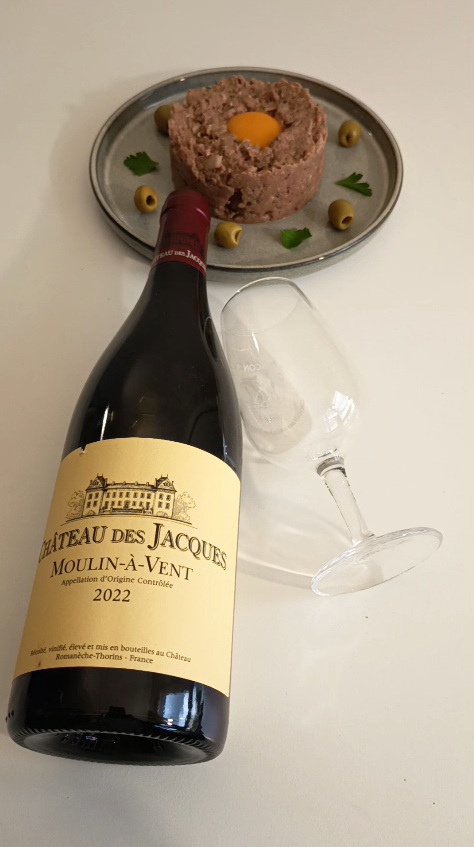
When you want to impress a connoisseur or bring a serious host gift, look for a Moulin-à-Vent, particularly from a historic estate like Château des Jacques. It could be called the « Rolls Royce » of the region, it carries the same prestige and estate-driven allure as a fine Bordeaux château. It is the most age-worthy, robust Cru in the region, and expert tasters routinely compare its deep, evolving aromas to the most legendary, expensive bottles of Burgundy.
Where to Buy Beaujolais Online ?
You don’t need to fly to France to stock your cellar. Here are the best US-facing online retailers and the exact bottles to add to your cart right now.
Wine.com offers a massive digital shelf that perfectly categorizes the entire spectrum of Gamay excellence:
Classic Benchmarks: Look for Georges Duboeuf, Mommessin, Louis Jadot, or Albert Bichot. These prestigious historic houses shaped the very identity of the region and offer reliable, classic profiles that please any crowd.
Artisan & Boutique Estates: Discover high-fashion, exclusive producers like Château Thivin, Domaine Lapierre, and Dominique Piron. Highly sought-after names featured on the world’s finest restaurant lists.
Everyday Pleasures: Stock up on Domaine Chermette or Domaine des Marrans for authentic, traditional, and convivial bottles that maximize value.
Natural & Low-Intervention: Experience the living, breathing purity of Antoine Sunier and Jean-Claude Lapalu, whose minimal-sulfite wines beautifully evolve in the glass as they breathe.
Iconic & Cellar-Worthy: For the ultimate collector, grab a bottle of Jean Foillard‘s Morgon Côte du Py or a single-parcel gem from Château des Jacques (Clos de Rochegrès or Clos des Thorins). These highly rated bottles receive massive praise from critics like James Suckling and Wine Enthusiast for their Burgundy-like depth.

Rather than overwhelming you with thousands of choices, WineExpress.com curates a highly focused, boutique selection of character-driven Crus. Keep an eye out for elegant, small-production bottles like Domaine Mont Bessay. It is the perfect shop for wine lovers seeking authentic, gastronomic Gamay that balances immediate pleasure with collectible cellaring potential.
Before adding bottles to your cart, download the free Beaujolais Moment Guide with the button below. It will help you quickly identify which styles and Crus best match the exact atmosphere, meal, or occasion you are shopping for.

WiredForWine focuses on a tight, concise portfolio centered strictly around quality, terroir, and tradition. They feature legendary traditionalists like Château Thivin alongside classic, food-friendly cuvées like Michel Tête in Juliénas. It is a brilliant destination for accessible, serious wines that excel at the dinner table.
WineOnSale is designed for buyers who want an efficient, curated selection without decision fatigue. They offer reliable benchmarks like Louis Jadot and Albert Bichot regional appellations. For fantastic casual value, they carry delicious, easy-drinking bottles like Maison de l’Envoye (Fleurie) alongside the elegant, complex Château de Pierreux and Château la Chaize in Brouilly. For an upscale artisan touch, their inclusion of Château Thivin’s Reverdon cuvée shines bright. (Note: This site focuses on accessible value and does not currently carry natural or ultra-rare iconic collector tiers).

This shop boasts an incredibly well-rounded, diverse lineup that covers every single style tier:
Classic Benchmarks : Safe-haven values from Mommessin, and sturdy Louis Jadot Crus.
Artisan Haute Couture : High-end sommelier favorites like Domaine de la Chanaise, Domaine Lafarge, and Domaine Sébastien Besson.
Everyday Casual : Excellent value-driven bottles from Vignerons de Bel Air and Château d’Ouilly, perfect for winding down after work.
Pure Natural Wines : Expert-level, additive-free gems including Domaine d’Anne Sophie Dubois (Fleurie) and the stunningly elegant Domaine Chapel.
Legendary Icons : Collector-grade masterpieces from Domaine Jean Foillard and Château des Jacques.
Your French Wine Concierge in Your Inbox
Take your table to the next level. No jargon, no snobbery : just flavor and confidence.
- Hand-picked French bottles available in the U.S
- Effortless restaurant-level recipes and pairings
- Simple ideas for memorable emotions
Welcome In this French Wine & Food Notes Mailing
Thanks for joining the Foodie Tasting Community
I’d like to receive newsletters & inspiration
No Spam. You can unsubscribe anytime.
Common Mistakes About Beaujolais
One of the biggest reasons people misunderstand Beaujolais is because they only experience one style or rely on outdated assumptions.
Here are some of the most common beginner mistakes.
Thinking All Beaujolais Tastes Like Nouveau
Many people associate Beaujolais only with Beaujolais Nouveau.
While Nouveau is fruity and playful, Cru Beaujolais can be:
structured
mineral
savory
elegant
surprisingly complex
Exploring beyond Nouveau completely changes how most people perceive the region.
Serving Beaujolais Too Warm
Beaujolais usually tastes best slightly cool.
A light chill often enhances:
freshness
fruit clarity
drinkability
food pairing balance
Serving it too warm can make the wine feel heavier and less vibrant. Put your Beaujolais wine 20 minutes in the fridge before opening and serving it.
Choosing Only By Appellation
In Beaujolais, producer quality matters enormously.
Two wines from the same Cru can taste completely different depending on:
vineyard management like concentration of the wine and yield in Gallons per Acres
harvest decisions
winemaking style as the maceration step that vary a lot in the winemaking practices
aging philosophy
Finding trusted producers is often more important than memorizing appellations.
Assuming Beaujolais Cannot Age
While many bottles are designed for immediate pleasure, serious Cru Beaujolais can age beautifully.
Especially:
Morgon
Côtes de Brouilly
Moulin-à-Vent
Some can evolve for years while developing greater complexity and texture.
Overlooking Food Pairing Potential
Beaujolais is one of the most versatile food wines in France.
Because of its freshness and moderate structure, it often pairs more easily with food than heavier reds by undereling the food and not overpowering it.
This is one reason sommeliers frequently recommend it in restaurants.
FAQ About Beaujolais
Is Beaujolais a sweet wine ?
Most Beaujolais wines are technically dry.
However, because Gamay produces such vibrant fruit flavors, many beginners perceive the wines as juicy or slightly sweet even when they contain very little residual sugar.
Is Beaujolais the same as Burgundy ?
Beaujolais is located just south of Burgundy but is considered its own wine region.
While Burgundy is mainly associated with Pinot Noir and Chardonnay, Beaujolais is primarily known for Gamay. There is one Beaujolais Cru which is said to be Burgundy-like : the Moulin-à-Vent C.D.O which aging takes the same color of great Burgundy Pinot Noir and develop the same aromas along time as fox fur and ripe cherry.
What food pairs best with Beaujolais ?
Beaujolais pairs especially well with:
roast chicken
turkey
pork
veal
burgers
charcuterie
- Cold starters
mushrooms
soft cheeses
Its freshness and low tannins make it highly versatile with food.
What is the best Beaujolais for beginners ?
Many beginners enjoy starting with:
Beaujolais-Villages which is perceived as the less acidic wine of this region
Fleurie which is full of fruits, flowers and charming aromas
Brouilly which settles the right balance between fruit forward wine and structured racy cuvées.
These styles are approachable, fruit-forward, and easy to enjoy.
What is the difference between Beaujolais and Beaujolais-Villages ?
Beaujolais-Villages generally comes from higher-quality vineyard areas and often offers:
more structure
greater depth
better balance
more complexity
Less acidity
compared to basic Beaujolais.
Can Beaujolais age ?
Yes.
While simple Beaujolais is usually consumed young, some Cru Beaujolais wines can age very well.
Morgon, Côtes de Brouilly and Moulin-à-Vent are especially known for aging potential.
Why do sommeliers love Beaujolais ?
Many sommeliers appreciate Beaujolais because it combines:
freshness
moderate alcohol
food friendliness
drinkability
strong value
It is also highly versatile across many cuisines.
Is Beaujolais good for Thanksgiving ?
Yes — Beaujolais is often considered one of the best Thanksgiving wines.
Its freshness and low tannins pair naturally with:
turkey
stuffing
cranberry sauce
roasted vegetables
mushroom dishes
Still unsure which Beaujolais bottle fits your next dinner, brunch, celebration, or cozy night in ?
Use the button below to download the free Beaujolais Moment Guide and quickly discover the best Beaujolais styles for every occasion.